
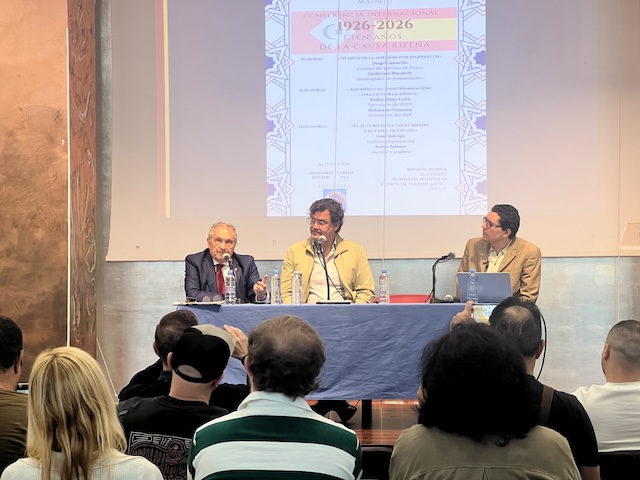
Madrid — One hundred years after the fall of the Rif Republic, the Rif question once again took center stage during an international conference in Madrid organized by the Parti National Rifain (PNR). Spanish historians, geopolitical analysts, journalists, and former military officers gathered to discuss the history, present situation, and future of the Rif.
The conference took place at a symbolic moment. On May 7, 1926, the Rif Republic came to an end. Under the leadership of Abdelkrim El Khattabi, it had become one of the most remarkable anti-colonial experiences of the twentieth century. A century later, several speakers argued that the history of the Rif remains insufficiently known and that the time has come for a renewed debate about its place in the history of North Africa and Europe.
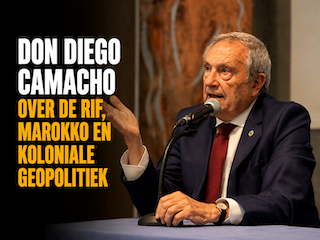
Don Diego Camacho: “The Rif Has Never Recognized the Sultan’s Spiritual Authority”
One of the most notable contributions came from Don Diego Camacho, a retired infantry colonel and intelligence expert. In his historical analysis, he emphasized that for a long period the Rif constituted its own political and social reality, distinct from the power structures of the Sultanate of Fez.
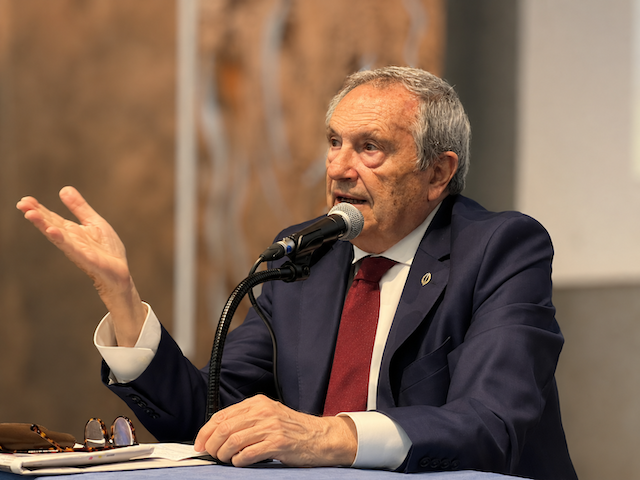
According to Camacho, the Rif was historically not a territory that identified with the religious legitimacy upon which the Moroccan sultans based their authority.
“Therefore, one may say that the Rif was, in my opinion, a territory clearly distinct from the Sultanate of Fez.”
He pointed out that the people of the Rif never recognized the religious claims of the sultan.
“Neither the Sultan of Fez nor the Sultan of Marrakesh was ever recognized as Amir al-Mu’minin (Commander of the Faithful), in other words, as a descendant of the Prophet Muhammad.”
According to Camacho, this is a fundamental historical fact that is often overlooked in discussions concerning the relationship between the Rif and Morocco.
“What is important to remember is that the Rif has never recognized the spiritual authority claimed by the Sultan of Morocco.”
In his view, this helps explain why the Rif has maintained a strong tradition of autonomy and independence throughout its history.
Ridouane Oussama: “The Rif Republic Was a Historical State”
Ridouane Oussama, President of the Parti National Rifain (PNR), also addressed the historical legitimacy of the Rif and the significance of the Rif Republic.
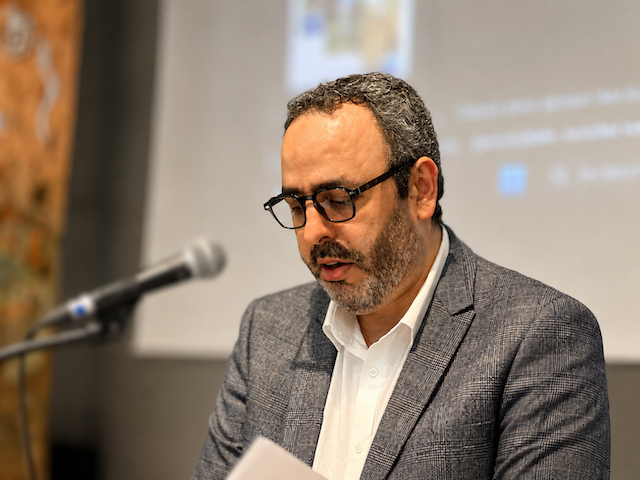
According to Oussama, the Rif should not merely be viewed as a geographical region, but as a historical political community with its own state-building experience.
“The Rif Republic was a historical state, with borders that were recognized in practice by the colonial powers present in the region.”
He stressed that the republic possessed all the essential characteristics of an organized state.
“The Rif Republic had institutions, a government, armed forces, and a financial system.”
According to Oussama, this historical reality constitutes an important element of the legitimacy of the Riffian cause.
He further emphasized that the Rif question can no longer be considered solely an internal Moroccan matter.
“The Rif question is no longer an internal Moroccan issue; it is an international and European-Riffian issue.”
According to him, this is a logical consequence of the fact that millions of Riffians now live in Europe.
“We want the world, and Europe in particular, to help us. Five million Riffians are Europeans.”
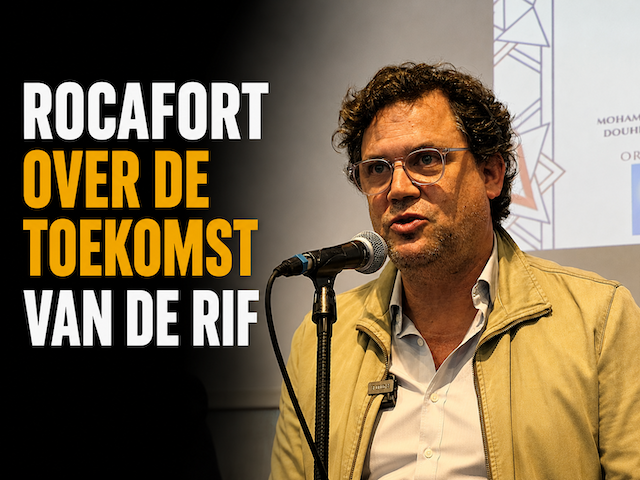
Guillermo Rocafort: “The 1978 Constitution Meant the Subjugation of the Rif to Morocco”
Another notable contribution came from Guillermo Rocafort, Spanish historian and geopolitical analyst. In his speech, he placed the Rif question within a broader geopolitical framework.
According to Rocafort, the situation of the Riffian people receives insufficient attention in Spain despite the historical ties between the two peoples.
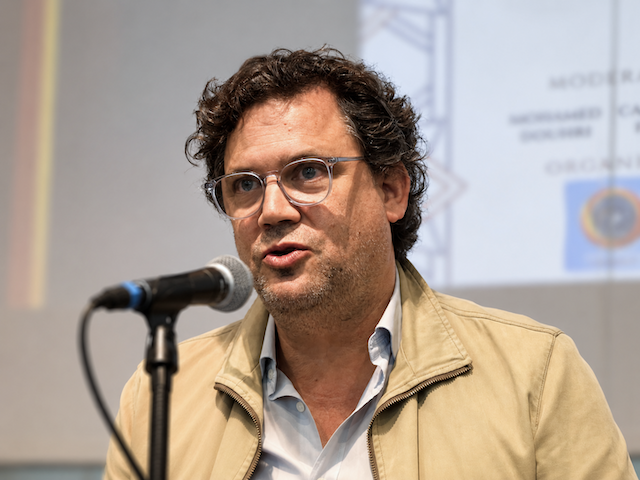
He argued that geopolitical developments over recent decades have had a decisive impact on the position of the Rif.
One of his most striking statements concerned the political developments in Spain following the transition to the constitutional system established in 1978.
“As far as Spain is concerned, it must be clearly understood that the 1978 Constitution meant not only the subjugation of the Rif to Morocco, but also the subjugation of Spain to the United States.”
According to Rocafort, the current situation of the Rif must be understood within a broader strategic context in which control of the Strait of Gibraltar, the Mediterranean, and North Africa plays a crucial role.
He also referred to what he described as the lack of awareness regarding the repression suffered by the Rif since the 1950s.
“The repression of the Rif in 1958 remains largely unknown in Spain.”
Furthermore, he stressed that the historical ties between Spain and the Rif should not be forgotten.
“We are destined to understand one another and to become strong allies.”
According to Rocafort, a Rif enjoying broad autonomy or independence could play a significant geopolitical role in the Western Mediterranean and contribute to a new regional balance.
A Call for Historical Recognition
Despite their different backgrounds, the speakers shared a common message: the history of the Rif deserves greater attention, both in Spain and across Europe.
The conference brought together historians, legal experts, geopolitical analysts, and representatives of the Riffian community around a central idea: that the Rif should not be viewed solely through the lens of contemporary political realities, but also through its own history, institutions, collective memory, and historical experience as an organized political community.
One hundred years after the fall of the Rif Republic, the demand for historical recognition, political rights, and international attention remains as relevant as ever.
For a more detailed understanding of the positions and analyses presented during the conference, we invite you to watch the speakers’ full presentations through the links provided below.




Leave a Reply